
Movie poster
Change Is Natural.
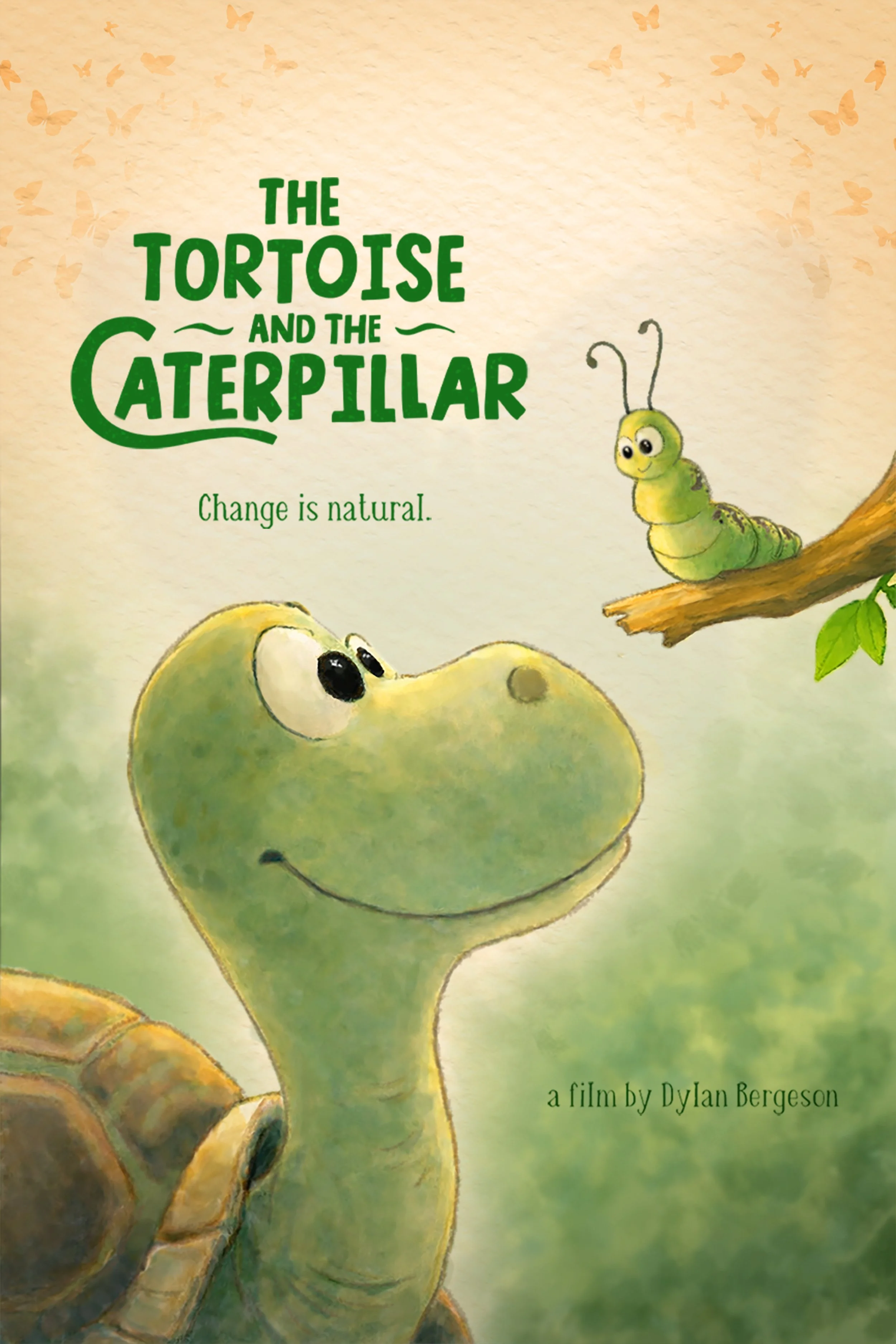
The Tortoise and the Caterpillar introduces a gentle tortoise who lives a quiet life in a peaceful forest. One day, he meets a curious caterpillar, whose playful spirit brings unexpected friendship into the tortoise’s slow and steady world. As the seasons pass, the two grow close, sharing small adventures and simple joys. But nature has its own plans, and when the caterpillar undergoes a remarkable transformation, the tortoise must face a change he struggles to follow. Through loss, memory, and the quiet rhythms of this forest, the tortoise learns that while some friends may drift beyond our reach, the moments we share with them never truly disappear. In learning to let go, he begins to understand that change is not something to fear, but something that allows new wonders to arrive.
What Follows
When developing this project, I began with a simple question: why do certain stories stay with us? The ones that endure often hold difficult ideas about the human experience while remaining accessible to a universal audience. I became interested in how children’s stories speak to grief, change, and loss with honesty without becoming overwhelming. That question led me to research how children’s literature has approached grief and death, and how those portrayals have evolved alongside changing understandings of child psychology. Throughout my research, I found that the natural world—changing seasons, growth, and transformation—often provides a way for children to understand loss as a part of life.
From that foundation, I created The Tortoise and The Caterpillar, a 3D animated story about friendship and the quiet aftermath of change, following Tortoise as Caterpillar transforms into a butterfly and flies away. What follows is a proof-of-concept pitch packet that brings together concept art, storyboards, 3D asset development, and a series of watercolor-inspired rendered stills. Together, these materials establish the project’s visual and emotional language and show how animation can approach emotionally complex subjects with honesty, delicacy, and care for younger audiences.
Storyboard Reel
This storyboard reel represents the current narrative structure of the film, combining timing, composition, and rudimentary sound, music and dialogue to explore tone and emotional pacing. It serves as a blueprint for the final film, emphasizing simplicity, clarity, and atmosphere. Watch it below!
Early Thumbnail Explorations
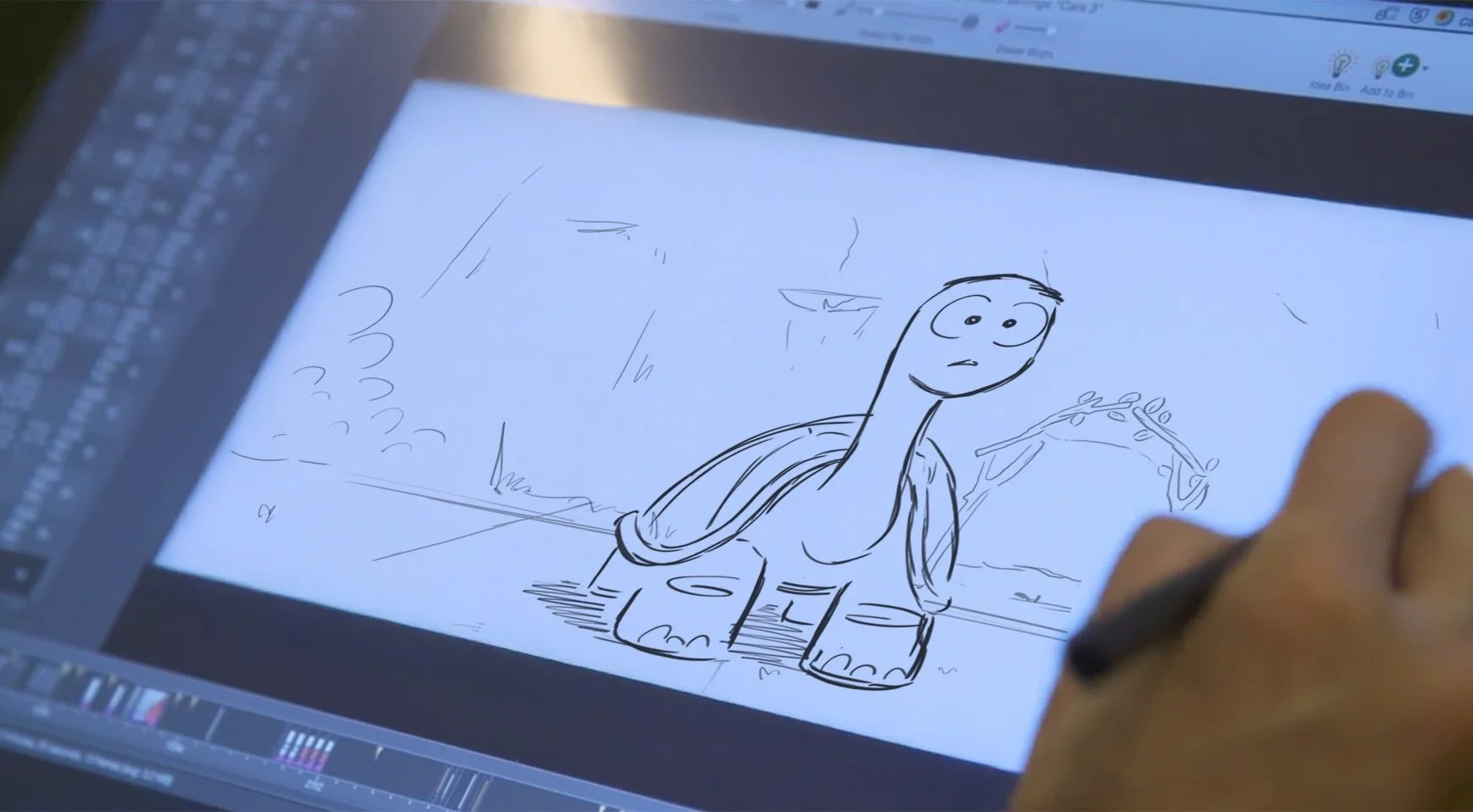
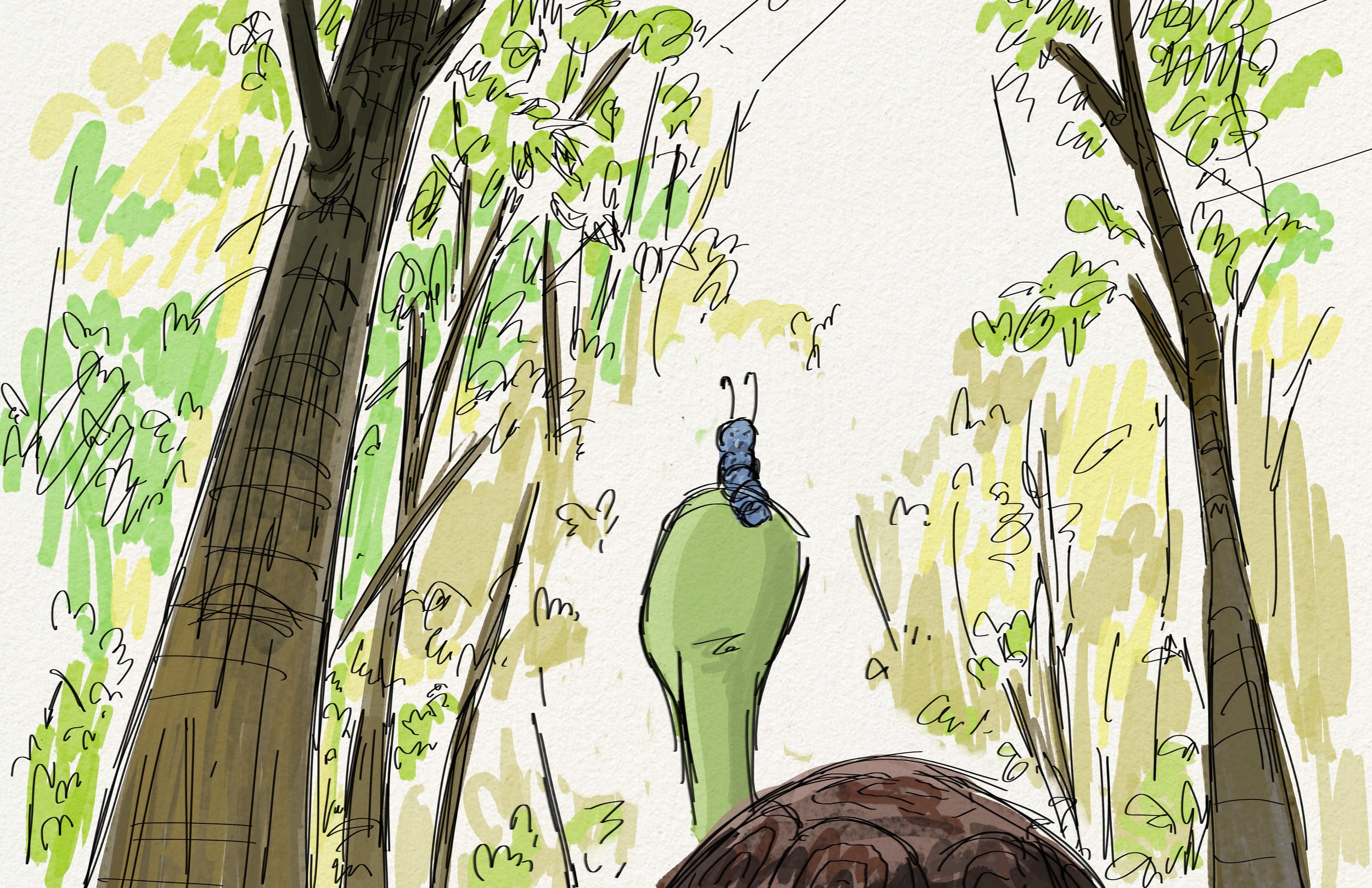
Rough thumbnail sketches were used to quickly explore composition, staging, and narrative flow. These early drawings focused on capturing ideas rather than detail, allowing for rapid iteration.
Story Panels
Through multiple iterations, I experimented with different approaches to pacing and clarity, gradually refining the visual language of the film.
The final story embraces simplicity, letting quiet moments and subtle change carry the emotional weight.
Look Development
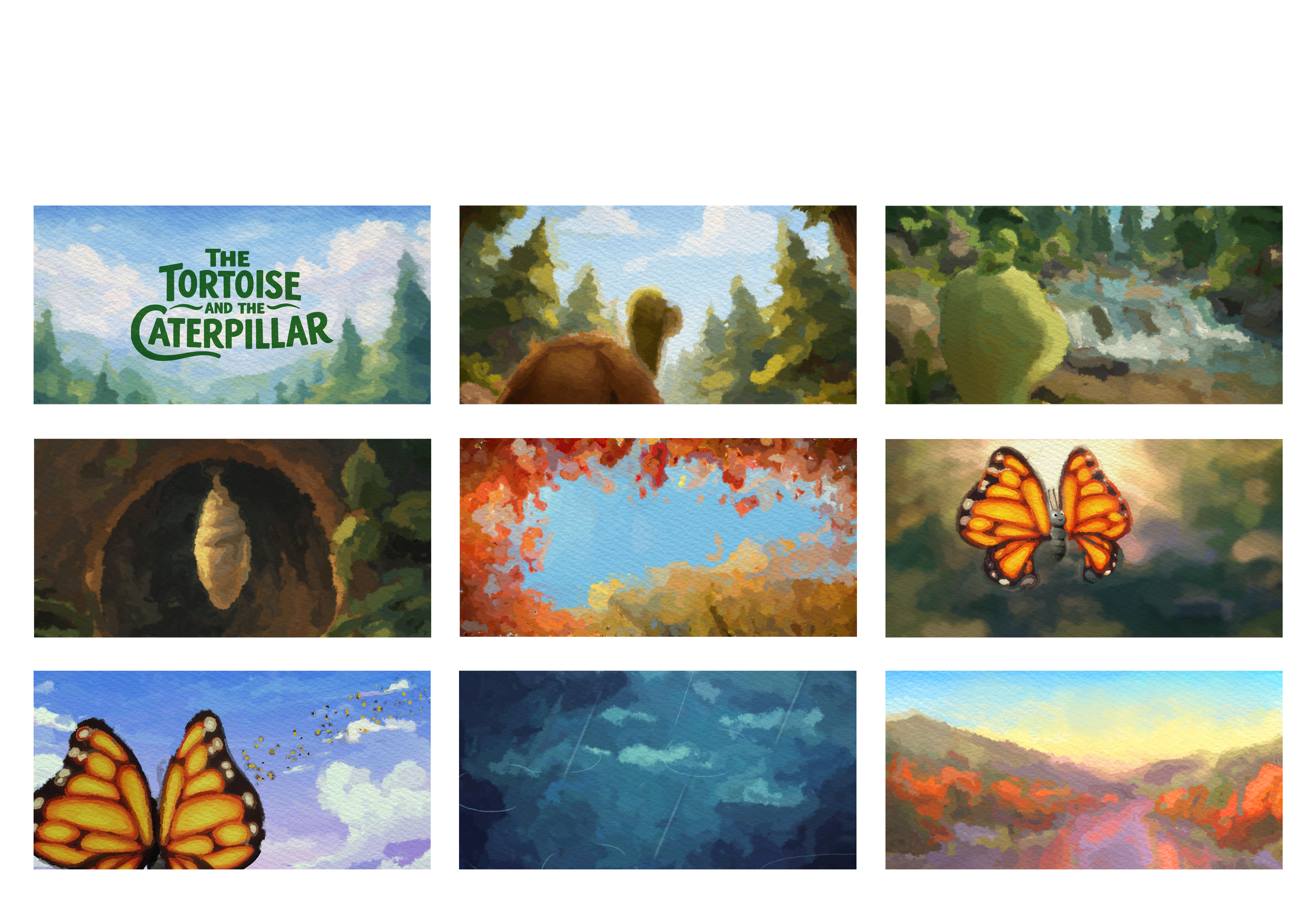
These style frames act as proof of concept for the film’s final visual style. Each image is rendered from the 3D scenes and completed using the watercolor compositing approach, showing how the characters, environments, and lighting come together to create the intended look of the short.
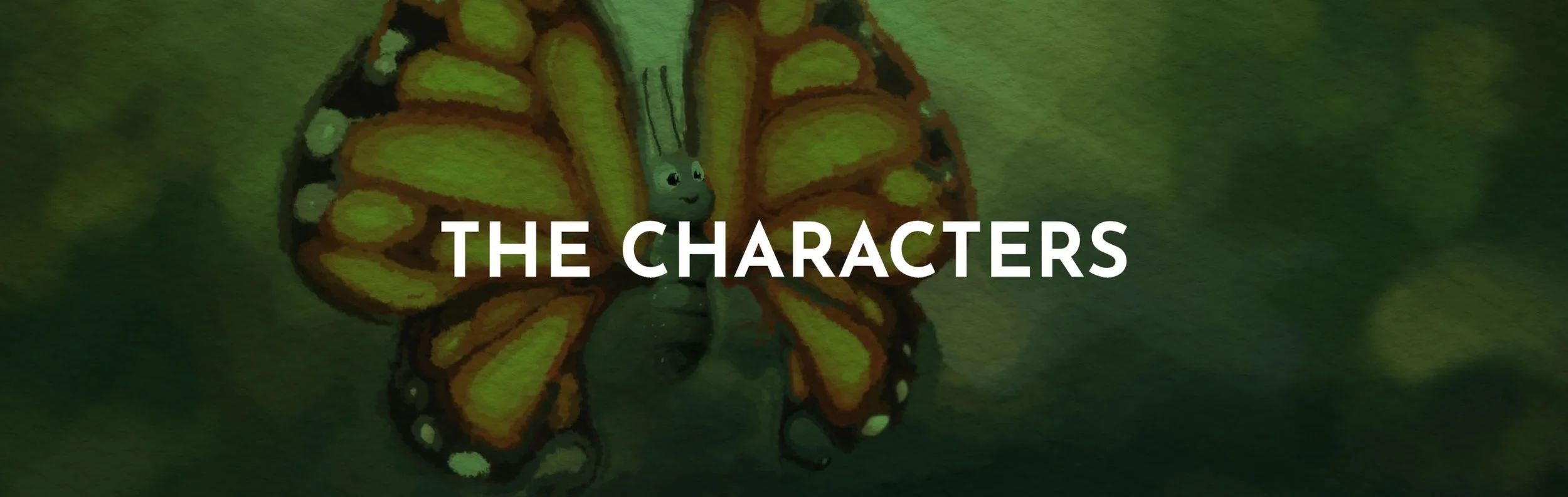
Tortoise
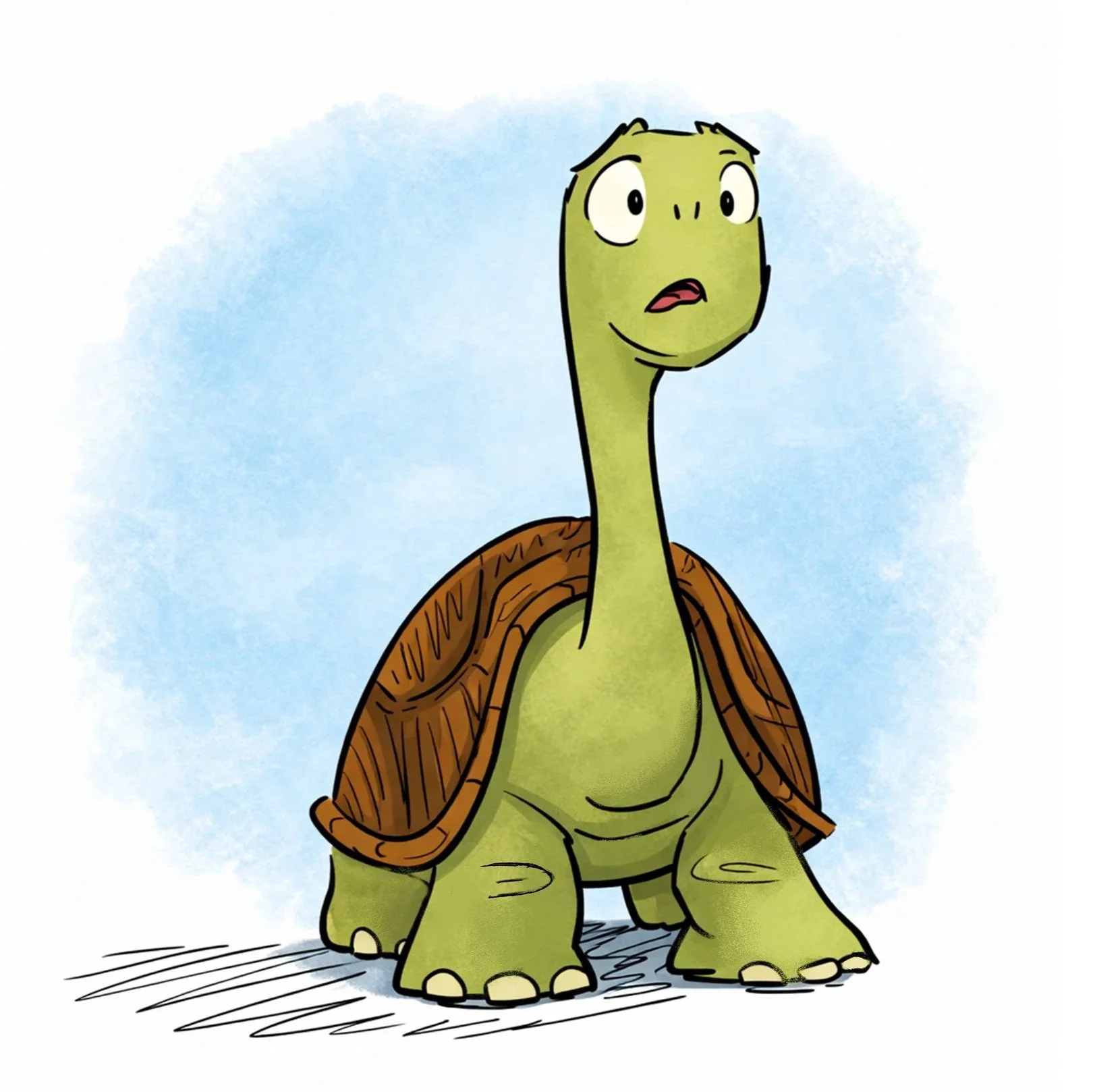
Quiet and grounded, the tortoise observes the world as it shifts around him, shaped by changes he cannot follow. Through these moments, he gradually learns to accept loss and find peace in what remains.
His design blends natural anatomy with gentle stylization, using softened forms and careful proportions to convey warmth and stillness. Much of this balance was explored directly in 3D, where the character’s shape and presence were refined through sculpting.

Caterpillar
The caterpillar was developed using soft, rounded shapes to create a gentle and approachable silhouette. Its proportions were kept small and flexible to contrast the weight and stability of the tortoise, supporting the visual language of change that runs throughout the film.
Final 3D model
Butterfly
The butterfly was designed with lighter, faster forms to support the sense of motion during the transformation sequence. Monarch-inspired textures, with warm orange tones, were chosen to read clearly against the bright sky he ultimately flies off into.
The Forest Environment
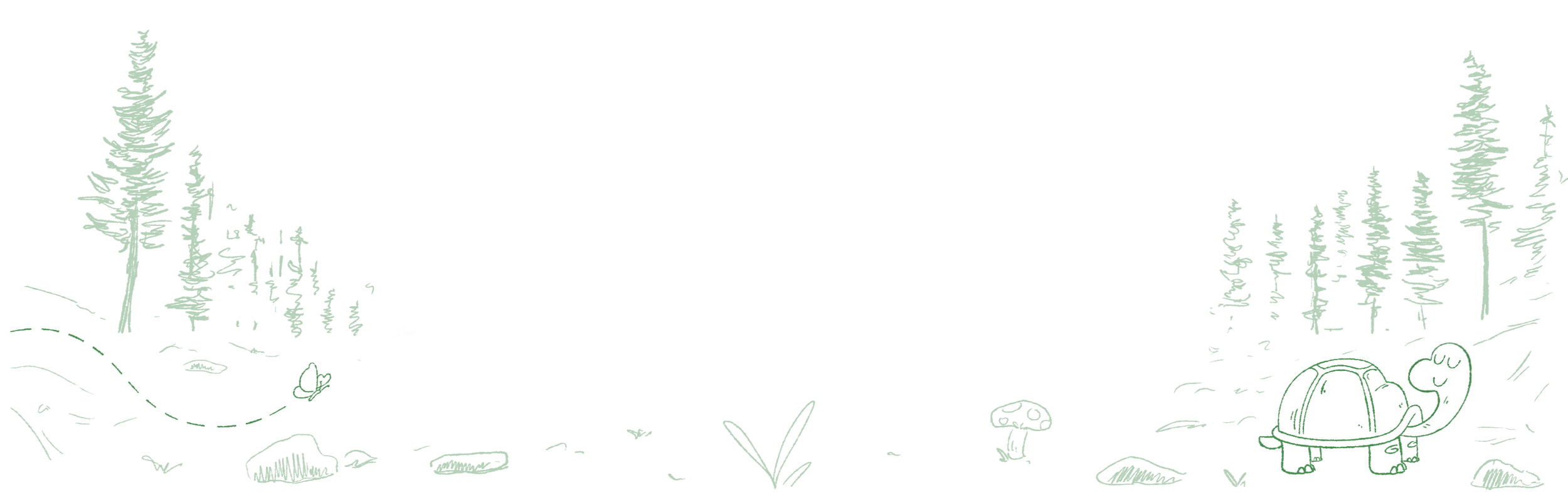
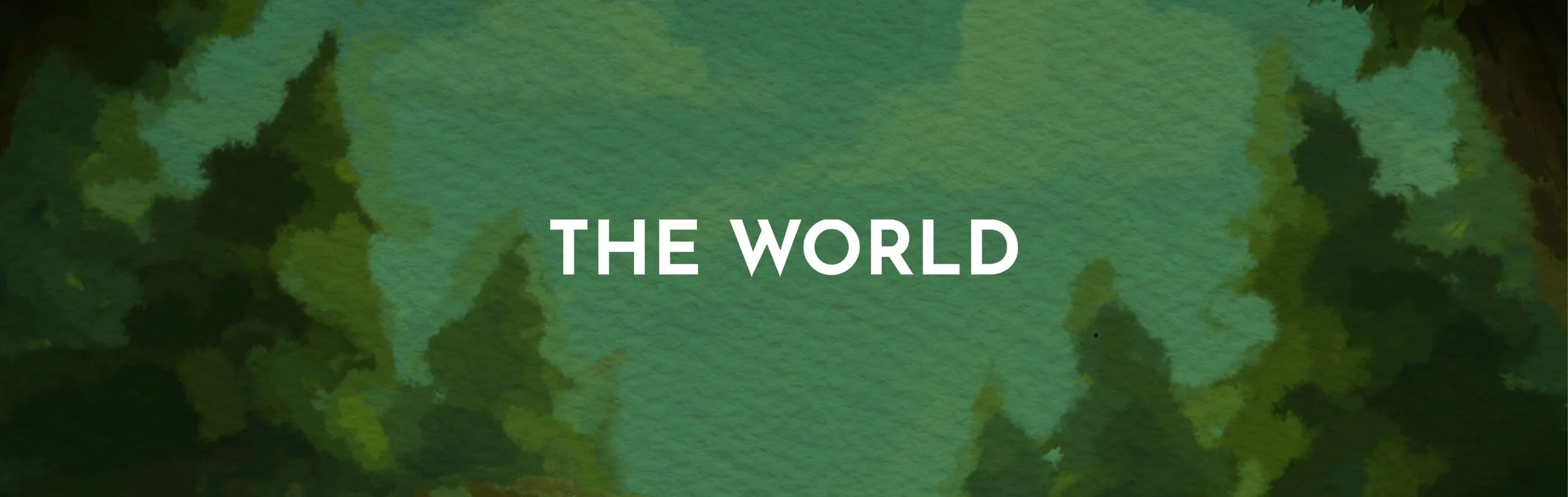
The world of the film takes place in a tall, shaded forest that feels vast, quiet, and secure. From the ground, the trees create a sense of shelter, forming a place the tortoise never feels the need to leave. Yet between the trunks, wide openings reveal bright skies and distant horizons, suggesting a larger world beyond the forest floor—one that feels especially inviting to the caterpillar, and later, the butterfly.
A Low-Poly Approach
Low-poly models were used for the environment assets provided by KorboleevV, including trees, plants, and ground elements, to keep the scenes efficient to build and render. Because the final look is achieved through a watercolor compositing style, high levels of geometric detail were unnecessary. This workflow allowed rendering to remain fast while giving flexibility to add or adjust visual detail during the final composite.
Scene Construction
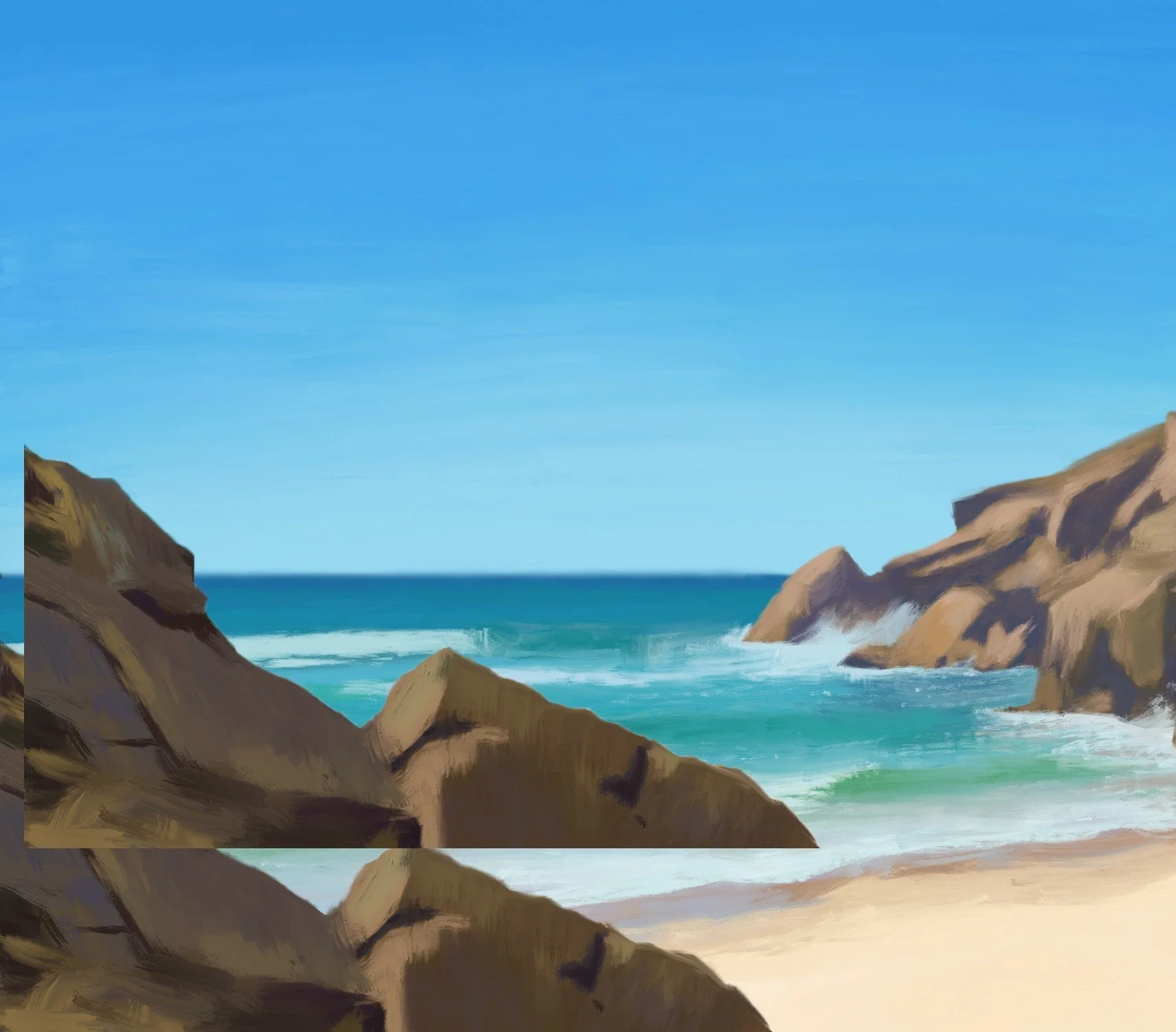
These progression tests demonstrate the environment workflow from basic scene layout in Maya, to a clean render pass, and finally to the finished watercolor-style composite. By keeping the models simple and relying on lighting and compositing for detail, the scenes remain efficient to render while still achieving the desired visual style.

Production Workflow
Because the project follows a short film production pipeline, careful planning was necessary throughout development. Script breakdowns, shot lists, Gantt charts, spreadsheets, and Autodesk Flow (ShotGrid) were used to organize the workflow and track the film’s progress.
Thank you for taking the time to view this project. The Tortoise and the Caterpillar began as an exploration of change, impermanence, and the quiet ways relationships shape how we see the world. Through this proof of concept, I hoped to show how emotionally complex ideas can be communicated through simple, visual storytelling in a way that remains accessible to younger audiences.
While this package represents a short film currently in production, I also see it as the beginning of future woodland fables that use animals and metaphor to explore these themes.
I am especially grateful to my instructors, Michael Wyshock and Jill Taffet, for their guidance and support throughout the past year. I look forward to continuing the project and seeing where it may lead.
Thanks For Stopping By